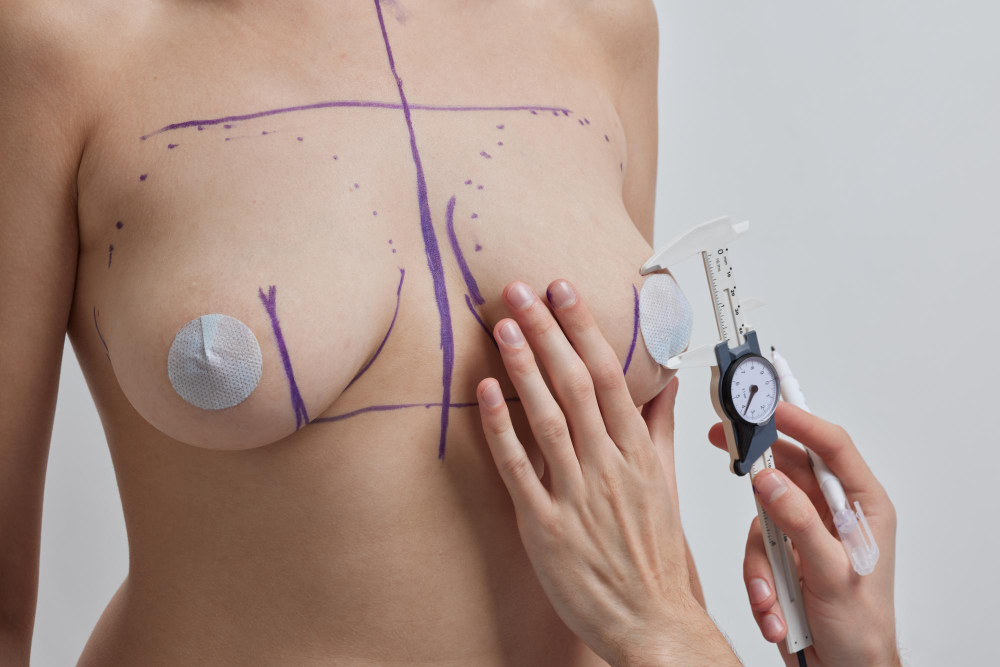
Reconstructive breast surgery is a highly specialized field focused on restoring breast form, symmetry, and structural integrity following mastectomy, lumpectomy, congenital deformities, trauma, or other medical conditions. Beyond aesthetic restoration, the procedure plays a significant role in physical rehabilitation and emotional recovery.
Breast reconstruction aims to recreate a natural breast contour while respecting individual anatomy, medical history, and long-term well-being.
This procedure may be suitable for patients who:
- Have undergone mastectomy due to breast cancer
- Require reconstruction after partial breast removal (lumpectomy)
- Experience congenital breast asymmetry or developmental conditions
- Have sustained trauma affecting breast structure
- Seek restoration of breast shape and symmetry
Comprehensive Evaluation & Individualized Treatment Planning
Each reconstructive journey begins with a detailed consultation and medical review. Important considerations include:
- Oncological history and treatment timeline
- Skin and tissue condition
- Availability of donor tissue (if autologous reconstruction is considered)
- Overall health status
- Personal expectations and long-term goals
Breast reconstruction may be performed:
- Immediately at the time of mastectomy
- Delayed, after completion of cancer treatment
Surgical options may include:
- Implant-based reconstruction
- Autologous (using the patient’s own tissue) reconstruction
- Tissue expanders
- Nipple-areola complex reconstruction
- Fat grafting for contour refinement
The approach is carefully selected to achieve structural stability, symmetry, and natural contour.
Surgical Technique & Safety Standards
Reconstructive breast surgery is performed in a fully equipped medical facility under strict safety and oncological protocols. In cases following cancer treatment, coordination with oncology specialists ensures comprehensive care.
Key priorities include:
- Restoring anatomical balance
- Preserving tissue viability
- Achieving symmetry with the contralateral breast
- Supporting long-term structural stability
Advanced surgical techniques are applied to optimize both functional and aesthetic outcomes.
Recovery & Expected Outcomes
Recovery timelines vary depending on the type and complexity of reconstruction. Some cases may involve staged procedures over time.
As healing progresses, patients often experience:
- Restoration of breast contour and volume
- Improved symmetry
- Enhanced physical comfort
- Emotional reassurance and renewed confidence
While reconstructed breasts may not fully replicate natural sensation, modern techniques aim to provide a natural appearance and durable structural result.